
LAST UPDATE August 28, 2026
Latest Film News & Releases
Additional announced September 2026 title releases from Warner Archive
Ryan's Daughter (1970) directed by David Lean and featuring Robert Mitchum, Sarah Miles and Trevor Howard. Shot originally on 65mm film and this remaster from a 4K scan from original negative. The original 6-track audio is 5.0 restored with also a 5.1 remix. 4K release includes both 4K and standard Blu Ray disk. Includes a special three-part documentary describing how the film was made. Extensive audio commentary tracks.
Marked Woman (1937) with Bette Davis and Humphrey Bogart, derived from the camera negative and a nitrate fine grain for censored scenes that were not in the later reissues. Includes two HD remastered cartoons and a "ripped from the headlines" mini-doc about Warners film production style of using active news stories.
Skyscrapers Souls (1932) with Warren Williams and Maureen O'Sullivan, remastered from preservation elements. Extras include a Bosko cartoon and the short film Snow Birds (1932).
Please Don's Eat the Daisies (1960) with Doris Day and David Niven. 4K scan from the camera negative. Includes as an extra the pilot from the TV show version of the story. Also includes original movie trailer.
The Quick Draw McGraw Show 45-episode cartoon collection (1959–1960) on six discs. Not counting four episodes released on VHS years ago (which consequently stirred up legal issues over the original music rights), these cartoon in this collection are making their first appearance on home video. Includes a mini-doc The Good, the Bad, and the El-Kabong.
Shelley Fabares 1944–2026
'Johnny Angel' singer and actor on the ‘The Donna Reed Show’ and ‘Coach’ – Washington Post
Her biggest break came when she was cast as Mary Stone on "The Donna Reed Show," where she was a regular from 1958 through 1963. During that time she also got a recording contract and had two Top 40 hits including "Johnny Angel." In the early 1960s, she also co-starred in three movies with Elvis Presley : "Girl Happy," "Spinout" and "Clambake."
Fabares voiced Martha Kent for Superman: The Animated Series – AOL
Coach TV Show Craig T Nelson remembers Shelley Fabares – People
Elvis Leading Lady and star on The Donna Reed Show – Deadline
Shelley Fabares, 'Johnny Angel' singer and actor in ‘The Donna Reed Show’ and ‘Coach,’ dies at 82 – Los Angeles Times
Hypothetically speaking, were you of an age when television — broadcast television — regularly reran "The Donna Reed Show”" and mid-’60s Elvis Presley movies, Shelley Fabares, who starred in both and died Sunday at the age of 82, might well have made a lasting impression on your impressionable youth. As you went through life together, a little jolt of happiness would accompany every new encounter; across the years there were many opportunities for such meetings, in which one found her older, unavoidably, but never aged. Petite, with delicate features and a soft voice, she nevertheless held a screen with authority..."
Shelley Fabares actress roles listed – IMDB
They go over the coming September HD releases from Warner Archive, with remastering and with plenty of add-on extras on the disks. The titles: Bundle of Joy, 1956; The Lost Patrol, 1934; Boy's Town, 1938; Dear Heart, 1964; The Great Waltz, 1938; and the 1958–1962 Maverick TV Show.
Interesting, there's a bit of a defense made for L. B. Mayer in regards to "apocryphal" accusations against his character.
"Everytime we make these improvements, it's gratifying, because we 've got to take care of these films and make them attractive to a new generation."
– from the presentation on You Tube.
Fast Review: Member of the Wedding – 1952: A twenty-six year old Julie Harris plays the 12 year old feature character Frankie, and for the most part does it so smoothly the age difference between portrayer and the portrayed doesn't appear. Frankie is, as they like to say about vulnerable characters in movies, "troubled," which is putting it mildly.
More about Member of the Water, 1952
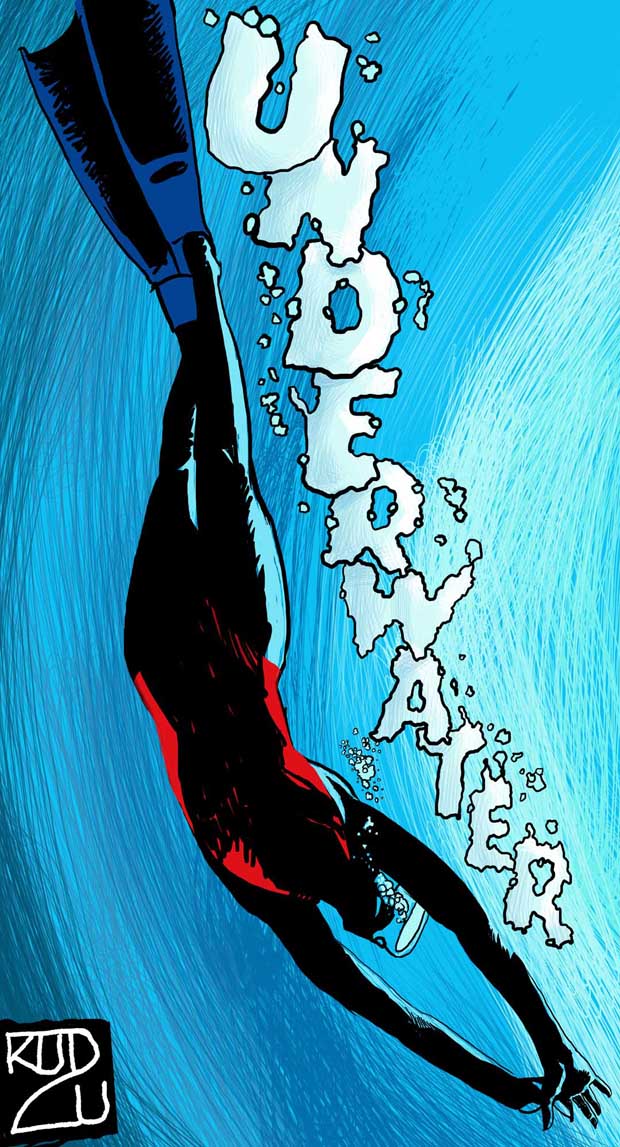
Fast Review: Underwater – 1955: What could go wrong with this film? It has the very fit Jane Russell and Richard Egan scuba diving, searching for a lost undersea treasure; it has producer Howard Hughes lavishing literally millions above the budget on this shoot; it was filmed in Hawaii (standing in for the Caribbean) and using (then) cutting-edge underwater color photography, so there are plenty of gorgeous, exotic ocean shots. The beautiful cast of Russell and Egan is bolstered with Gilbert Roland and Lori Nelson, and there's a lot of excellent stunt work. Unfortunately, there is a dry predictability that comes out of an overly-simple storyline, as if an A-picture production company decided to stay true to the confines of a low-end B movie script.
More about Underwater, 1955
Tenth anniversary of Hail Caesar! "a hidden 21st-century masterpiece" – Movie Web
Talk of the Town in 4K UHD – AMAZON
Cary Grant, Jean Arthur and Ronald Colman, 1942.
Ann Blyth 1926 – 2026
Ann Blyth (Anne Marie Blythe), born 16 August 1927; died 24 June 2026
"...played wicked daughter in ‘Mildred Pierce...a gifted lyric soprano..." – Washington Post
She began her film career at Universal Pictures in a series of swing-era teen musicals with the rubber-faced comic actor Donald O’Connor. "Chip Off the Old Block" and "The Merry Monahans" (both 1944) did little to prepare audiences, however, for the Ms. Blyth they would meet the next year in "Mildred Pierce." [Blyth] said she beat out more established young stars such as Shirley Temple because of her combustible chemistry with Crawford, whom she smacked in the jaw in a pivotal scene. "I was the lucky one because Joan Crawford did the test with me, and it made a world of difference," she told the Hollywood Reporter decades later. "People just didn’t do that, not of her stature."
"...died peacefully of natural causes" – MSN Deadline Hollywood
Ann Blyth Obituary – UK The Guardian
According to Jacqueline T. Lynch, author of Ann Blyth: Actress Singer Star, Blyth initially followed Mildred Pierce by playing "troubled young women with chips on their shoulders, axes to grind, or evil plots to hatch" before changing course to avoid typecasting. Having made the leap from nice to nasty, she reverted for the most part to her original comfort zone..."
"Ann Blyth, the petite actress and singer who earned an Oscar nomination for portraying Joan Crawford’s demon daughter, Veda..." – Hollywood Reporter
Oscar-Nominated Ann Blyth Dies at 98 – New York Times
Her agent felt she had more to offer than just peppy musicals, and pushed hard for her to be cast in "Mildred Pierce." Soon after finishing the film, though, Ms. Blyth was thrown from a toboggan while sledding. She broke her back and was bedridden for months, followed by a long period in a steel brace. (For the Academy Awards ceremony in March 1946, she wore a gown designed by the studio to cover the brace.)"
In the various news obits on Blyth, it is said that initially the doctors told Blyth she might never walk again. She appeared in a small part in Burt Lancaster's Brute Force in 1947 in a wheelchair. Later, she was back on her feet and appeared in 41 other feature films and TV show appearances.
New Out of the Past Blu Ray is coming – 4K UHD disk from new 4K Scan of the original nitrate camera negative – Warner Archive Facebook
On Celebrity Biographies
"Gloria DeHaven twice turned down lucrative sums to write her autobiography, insisting that she preferred to maintain her privacy. “I don’t want people flipping through the pages of my life," she maintained to the disappointment of her would-be publishers – UK The Times August 05, 2016
"In her later years, Miss Goddard wrote, skied and walked. Though she lived quietly, she was known for her collection of jewelry and French impressionist paintings. She and Andy Warhol taped about 80 hours of notes for what was to be a book on her life. But she eventually returned the advance to the publisher, admitting, "I didn't tell Warhol anything." This should not have surprised anyone who read a 1965 newspaper interview in which she declared, "None of my biographies is true. I have never given out the facts of my life." – Washington Post April 23, 1990

Review: The Uninvited – 1944: Ray Milland and Ruth Hussey plasy a brother and sister couple on vacation in Cornwall, UK, who become infatuated with an abandoned home along the shore. They move fast to find the owner and buy the building, move in, but then the late-night wailing of a woman's voice begins to be heard...
This Gothic ghost story has a kind of light humor that Milland and Hussey bring to the mix which isn't reflected very much elsewhere in the tale – more about The Uninvited, 1944.
No longer wondering: the twice annual Barnes and Noble "50% off" sale on Criterion disks is now happening. I saw a dozen people picking through the Criterion titles at the nearby Barnes and Noble in a space usually occupied, at best, by 2 or three shoppers.

"Like you said, Charlie, any guy who gets married is a dope. So I'm looking for a dope."
Review: Paris Model – 1953: A certain dress design ("number 89, nude at midnight, $890 dollars") is passed from girl to girl (in this case Marilyn Maxwell, Barbara Lawrence, Paulette Goddard, Gloria Christian and Eva Gabor) and each girl experiences a different, but rather similar, adventure while wearing the dress.
More about Paris Model, 1953
Review: High, Wide and Handsome – 1937: Though usually classified as a musical, this film doesn't quite fit the genre. Featuring a love story between a "Medicine Show" entertainer (Irene Dunne as Sally Watterson) and a Pennsylvania farmer (Randolph Scott as Peter Cortlandt), the backdrop is 1859 with an oil boom going on as derricks go up on farmland and fortunes are being made by transporting "rock oil" (as they call it in this film) over to refineries.
More about High, Wide and Handsome
"Gorilla? I captured him as a baby. He was alright until he grew up."
Review: The Bride and the Beast - 1958: This film has enough stock footage in it of Africa that if the story was deleted, you'd still could have an interesting, though short, travelogue in which fearsome animals roam about, eat, run, and attack each other. But that's not what this film is about, because we have a lot of melodrama in The Bride and the Beast, and sometimes it's odd and fascinating but more often is tedious and ludricous otherwise.
More about The Bride and the Beast - 1958
Coming on disc July 14, 2026: Two Arabian Knights (1927) and The Racket (1928) from Howard Hughes in Hollywood Volume 1
Story at Flicker Alley
"Newly restored by Flicker Alley" - set includes audio commentaries, outtakes, the documentary Howard Hughes in Hollywood (2026), the First Academy Awards (2026), a "Hart Wegner Remembrance," Image Gallery of production stills, promotional material, and rare documents from the Howard Hughes Motion Picture Records at the University of Nevada. Las Vegas Souvenir Booklet with a new essay by film historian Imogen Sara Smith, vintage reviews, conservation notes, and introductions on each score. All Region Encoding (A,B,C).
A December 2019 review of Two Arabian Knights here at Cinemagraphe.
Criterion announces their September disc releases
Henry Fonda and director Sidney Lumet with 1957's 12 Angry Men
2K digital restoration - nine hours of first-person testimonies of Holocaust survivors - 1985 (French) – Shoah
New Warner Archive releases for July
UPDATE June 15: Some titles have been moved to August 4 for release: Macao, A Midsummers Night's Dream, Presenting Lily Mars, Random Harvest, The Seventh Cross and The Sisters. The other July films coming 7/28 are Bonnie Scotland, Captain Horatio Hornblower, Crime Wave, Colt 45, Lily Turner and The Keyhole.
An incredible slate of 13 film releases this month from Warner Archive. One of the highlights is getting a Kay Francis 1933 film, The Keyhole, and Ruth Chatterton's Lilly Turner also from 1933. There's simply not that many HD releases on disc for their films (Kay has only seven official releases that I know of, and The Keyhole will move that number to eight. Ruth has eleven with this release of Lilly Turner.)
Captain Horatio Hornblower 1951. Technicolor feature from director Raoul Walsh and stars Gregory Peck and Virginia Mayo. From the original nitrate film negatives. Extra features: Bugs Bunny cartoon Captain Hareblower from 1954 (7 minutes); My country 'Tis of Thee from 1950 (19 minutes), original trailer, also Luxe Radio adaptation of the film.
Macao, 1952. 4K scan from camera negative. With Robert Mitchum and Jane Russell, "mostly" directed by Joseph von Sternberg. Includes Eddie Muller audio commentary joined by Macao script writer Stanley Rubin. Also Robert Osbourne Private Screenings interview with Robert Mitchum and Jane Russell.
Random Harvest, 1942. With Greer Garson and Ronald Colman and directed by Mervyn LeRoy. 4K scan from preservation elements. Includes these extras: Don't Talk (1942) 22 minute short with Donald Douglas and Gloria Holden; Marines in the Making, 1942, 9 minute short, and original Luxe radio adaptation of the feature film.
The Keyhole, 1933. From the original camera negative. With Kay Francis and George Brent and directed by Michael Curtiz. Includes 2 cartoons, the 6 minute Popeye Wild Elephinks (1933) and Buddy's Day Out (1933) 7 minutes.
Presenting Lily Mars, 1943. 4K scan from safety film. With Judy Garland and Van Heflin. Includes Luxe Radio adaptation.
Lilly Turner, 1933. With Ruth Chatteron and George Brent, directed by William Wellman. 4K scan from the original camera negative. Includes Vitaphone short featuring Harry Gribbin and Shemp Howard; cartoon Bosko's Picture Show. Includes trailer.
The Sisters, 1933. 4K scan from the nitrate camera negative. With Erroll Flynn and Bette Davis, directed by Anatole Litvak. Includes The Breakdowns of 1938 blooper reel, and Night Intruder (1938) 14 minute. Includes trailer.
Bonnie Scotland, 1935. Scan from the nitrate "lavender" protection film. With Laurel and Hardy. Richard Vann audio commentary with Leonard Maltin. Includes Laurel and Hardy excerpts from Hollywood Party (1934) with Lupe Velez, and Pick A Star (1937).
Crime Wave, released 1954 but originally filmed in 1952. 4K scan from the camera negative. With Sterling Hayden, Gene Nelson, Phyllis Kirk and Charles Bronson, Directed by André De Toth. Includes audio commentary from Eddie Muller and James Elroy. Has featurette on the making the film with interviews and archival footage of the makers. Baby Buggy Bunny (1954) 7 minutes; Gadgets Galore (1954) 10 minutes. With trailer.
A Midsummer Night's Dream, 1935. "Original roadshow release" version. 4K scan from the camera negative and nitrate fine-grain sources. With James Cagney, Dick Powell, Ian Hunter, Verree Teasdale, Hobart Cavanaugh, Olivia de Havilland, Jean Muir, Grant Mitchell, Frank McHugh, Dewey Robinson, Joe E. Brown, Hugh Herbert, Otis Harlan, Arthur Treacher, Victor Jory, and Anita Louise. Directors William Dieterle and Max Reinhardt. Disc includes featurette The Dream Comes True (1935) 8 minutes, Shake, Mr. Shakespeare (1936) parody short, 20 minutes.
Colt .45, 1950. Technicolor film directed by Edwin Marin. 4K scan from original negatives. Stars Randolph Scott, Zachary Scott, and Ruth Roman. Includes Cartoon short.
The Seventh Cross, 1944. Director Fred Zinnemann, starring Spencer Tracy, Signe Hasso, Jessica Tandy and Hume Cronyn. 4K scan from film preservation materials. Includes three Fred Zinnemann directed shorts such as One Against the World with Jonathan Hale (1939) 11 minutes, plus two other titles. Disc includes original trailer.
Letty Lyndon, 1932 DVD version of the Blu Ray release from June 2026.

Review: A Queen for Caesar - 1962: About six months after the release of this relatively modest Italian production telling the story of how Cleopatra (Pascale Petit) ended up in a rug rolled out at the feet of Caesar (Gordon Scott), the 1963 Cleopatra with Elizabeth Taylor appeared. Often cited as the most expensive film ever made (after adjustments for inflation and paying attention to a ratio of how production costs differ), the Taylor Cleopatra is famous for both the cost and gossip surrounding its production. That film came out in a flurry of publicity that had been building for years over which time the film had reached a status of fame where it was famous for being famous. Not the case here with this 1962 film.
More about A Queen for Caesar - 1962
Amazon FreeTime Unlimited Free Trial
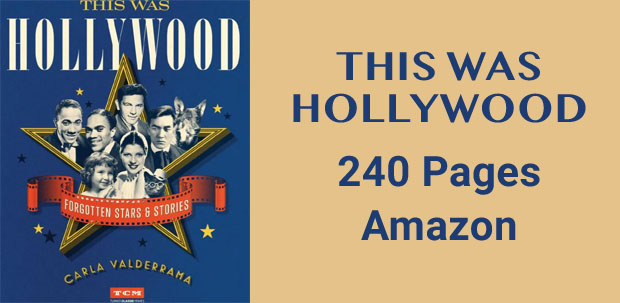
From former screen legends who have faded into obscurity to new revelations about the biggest movie stars, Valderrama unearths the most fascinating little-known tales from the birth of Hollywood through its Golden Age.
This Was Hollywood: Forgotten Stars and Stories (Turner Classic Movies)
More New Warner Archive disc releases in June
Come Live With Me, 1941. Hedy Lamar and Jimmy Stewart, directed by Clarence Brown. 4K scan from the camera negative. Includes two M-G-M shorts: Officer Pooch and American, Preferred (1941).
Strange Cargo, 1940. Clark Gable, Joan Crawford, Ian Hunter, Peter Lorre. Directed by Frank Borzage. Includes "Gable and Crawford" featurette from the original DVD release; Goin' Fishin' (1940) an Our Gang short; M-G-M cartoon Home on the Range (1940).
Rose Marie, 1936. The second screen team-up of Nelson Eddy and Jeanette MacDonald. Directed by W. S. Van Dyke. Includes Screen Guild radio Rose Marie show version from 1947; 1948 performances of Jeanette MacDonald and Nelson Eddy together on The Kraft Music Hall; 1936 Vick's Open House radio program performances of Jeanette MacDonald and Nelson Eddy. M-G-M Hollywood the Second Step short film; Happy Harmony cartoon 1936 Little Cheeser.
Pretty Maids All in A Row, 1971. Rock Hudson, Angie Dickinson, Roddy McDonald. Directed by Roger Vadim. Written by Writers Gene Roddenberry and Francis Pollini. 4K remaster.
Last Summer, 1969. Barbara Hershey, Richard Thomas, Catherine Burns, Bruce Davison. Includes a deleted scene, new audio commentary, video of Q & A's with the stars talking about the film in Los Angeles and New York City. Includes trailers and a booklet. Director Frank Perry.
"Film buff finds lost 1968 vampire TV movie that was rumored to be so scary it was ordered destroyed"
Story at MSN New York Post
On the occasion of her 100th birthday "Behind the myth" of Marilyn Monroe – Irish Times
The problem with writing about Marilyn Monroe to mark her centenary is that everything to be said about her has already been said, and almost all of it has been mediated through an event that took place 64 years ago: her fatal barbiturate overdose at the age of 36..."
Review: The Admirable Crichton - 1957: There was a slew of "island" movies post-World War II and through the 1950's. The Blue Lagoon (1949) and Island of Desire (1952), both British productions, built on the already existing genre of beachcomber stories in which someone (willingly or unwillingly) is isolated onto an island and has to either contend with weather, food sourcing, or simply a foreign environment of people and culture (for example the 1938 Beachcomber with Charles Laughton). With Blue Lagoon and Island of Desire, the situation is an echo of Adam and Eve, but 1957's The Admirable Crighton (aka Paradise Lagoon) pushes this into an almost (but not quite) farcical extreme with four couples marooned on an island. On top of this simple mathematical balance is an evaluation of the English class system run through a very unusual situation where tradition and genius have to come to terms with each other.
More about The Admirable Crichton - 1957
New Warner Archive releases in June
Night and Day 1946. Technicolor feature with Cole Porter tunes with Cary Grant. From new 4K scan. Extra features: 2-reel Musical Movieland, a Dezi Arnaz 1-reel musical short, The Big Snooze Bugs Bunny short.
Thirty Seconds over Tokyo, 1944. With Spencer Tracy, Van Johnson, and Robert Walker. Includes the shorts The Lady Fights Back short and Ode to Victory and Mouse Trouble, a Tom and Jerry cartoon.
Letty Lyndon, 1932. Out of circulation for some 90 years due to legal problems. Scanned from safety film copy of the original negative. With Joan Crawford, Robert Montgomery, May Robson and Nils Asther. Includes these extras: Irving Thalberg, Prince of Hollywood (2005 documentary); five Joan Crawford radio appearances with two episodes M-G-M's Good News radio program, A Doll's House Lux radio program drama, The Train Ride radio adaptation, and None Shall Part Us original radio program.
Start the Revolution Without Me, 1970. With Gene Wilder and Donald Sutherland. 4K scan from camera negative. Includes cartoons The Scarlet Pumpernickle and The Napoleon Bunnypart.
The Hanna-Barbera Dasterdly and Muttley and Their Flying Machines cartoon collection. 4K scans from camera negatives. Extras on the Blu Ray are the same as on the original DVD collection release.
Review: Zarak, 1956: Zarak Khan (Victor Mature) and dancer Salma (Anita Ekberg) are having a tough time making their mutual affection viable. It is the 1800's and the British Empire is cracking down on Afghan bandits like Zarak, and then there's the problem that Salma is one of Zarak's father's various wifes. A Technicolor/CinemaScope adventure shot on location in India, Morocco, and Myanmar.
More about Zarak, 1956
Review: Superman, 2025: This is, unfortunately, kind of a stupid movie. The special effects are often spectacular, though not always, and there are performances from the cast that are really quite good, but, again, not always. But, in the end the film is doomed by its script. Superhero films are not exactly renowned for adherence to reality, but even with the acceptance of the extraordinary physical powers of Superman, something easy enough to do after many decades of superhero movies (a cycle kicked off by the 1978 Superman with Christopher Reeves), it is the actions of the human cast that bogs down this movie into a Saturday morning cartoon level of storytelling.
More about Superman, 2025
Includes the film, plus a variety of extras, including:
The Inimitable Corinne Griffith: The Orchid Lady of the Screen (2026) - A visual essay from historian David Pierce, narrated by Claire Lockhart, that explores the life of The Garden of Eden’s beguiling star
Blue Ray The Garden of Eden

Review: Cat-Women of the Moon, 1953: Marie Windsor is having serious problems keeping her mind on her job as navigator on a rocketship traveling toward the moon. She keeps feeling compelling thoughts demanding she land the craft at a certain spot on the far side of the familiar space orb. Once landed, they disembark and Windsor deftly maneuvers the male crew (the ship's two leaders are both in love with her) toward a secret ruined city below the surface. There they discover a race of "cat-women" who run around in black leotard tights and who exercise a kind of mind-control skill that is at its most powerful when projected onto the female brain, that is, Windsor's. Meanwhile, the men are delighted to meet these beautiful denizens of an ancient space-empire, not suspecting the Cat-Woman have a master plan to swipe the rocketship and head to earth on a mission to conquor and repopulate their almost vanished species.
More about Cat-Women of the Moon, 1953
The line-up of May releases from Warner Archive, quite a few titles with excellent new 4K scans from quality film elements.
Latest Film News & Releases
Blue Ray Fleischer Cartoons – Greatest Hits, Vol. 1
Twenty animated shorts including Betty Boop, Popeye and others. Bonus material includes audio commentary by a "roundtable of Fleischer experts:" Paul Dini, Will Friedwald, Bob Jaques, Charlie Judkins, Mark Kausler, Thad Komorowski, Leonard Maltin, Ray Pointer and Rob Waldman.
Fast Review: The Return of Swamp Thing - 1989: This film doesn't have much ambition other than to play sequel to the original film of 1982 and to try to underline every character and story element with an alternative meaning that is pure camp humor. Louis Jourdan plays a villain that seems somehow bored no matter how much mayhem is happening in his immediate surroundings, and our main star, a young and pretty Heather Locklear, seems to happily grin bigger and bigger as the preposterousness of the story builds. The special effects, writing and side-characters are much better than a straight-to-VHS-tape movie of the 1980s, but somehow The Return of Swamp Thing seems like it was truly made to reside on the shelf of some eternal Blockbuster Video store where it is always ten-minutes before closing on a Friday night and you've already seen all the other "better" titles.
Release News
4K Release: Hold That Ghost — Abbott and Costello
One of Abbott and Costello’s earliest comedies and one of their best. The film has a spontaneity, helped along by Joan Davis, that is not always present in later releases from the duo.
Three-Film Blu-ray Collection: Brit Noir
Includes The Frightened City (1961), The Ringer (1952), and Cage of Gold (1950). Incidentally, Sean Connery and Yvonne Romaine also appear in The Frightened City.
UK Edition of Buster Keaton’s The General Coming in 4K
Eureka has announced a UK 4K edition of Buster Keaton’s silent comedy classic The General.
Joan Bennett and Claude Rains: The Man Who Reclaimed His Head
The 1934 drama starring Claude Rains and Joan Bennett is coming to Blu-ray.
Fast Review: The Divorce of Lady X, 1938: Laurence Olivier is an attorney in London who is a jaded veteran of divorce trials. One evening he is forced by circumstances of weather to stay overnight at a hotel teeming with women who are also stuck there after an event at the hotel's dance hall. Mercilessly disregarding the plea of the hotel management to "double-up" on lodgings since there's not enough room for everyone, Olivier ends up being outsmarted by a clever Merle Oberon who practically steals his bed out from under him, an action that leaves him sleaping uncomfortably in an outer room and also quite smitten.
More about The Divorce of Lady X
Review: The Leech Woman, 1960: Colleen Gray spends part of this film under heavy age makeup, caught in a twisted variation on the “fountain of youth” story. In this case, a venal scientist (her husband!) is determined to make millions from an African tribe’s secret youth-restoring medicine. He pretends his efforts are meant to restore his much older wife’s health and beauty, but we can easily see this is merely a ploy to gain access to her wealth. When success comes, though, there's a price, one that catches the mendacious husband completely by surprise.
More about The Leech Woman, 1960
The Marion Davies' film It's A Wise Child, 1931, Warner Archive Blu Ray, release coming May 26, 2026.
HD master from a new 4K scan of best preservation elements!" "...a witty portrait of small-town morality turned upside down – and a reminder of why she ranked among Hollywood’s most engaging stars. Out of general distribution for decades and never shown on television..."
Buy it at Amazon

Virginia USA based Elder Care for bill payment, case management, prescriptions, tax records or support for caregivers - AllStar Care Solutions
Belief-Code, Body Code and T3 Therapy? See sacred-connection.com